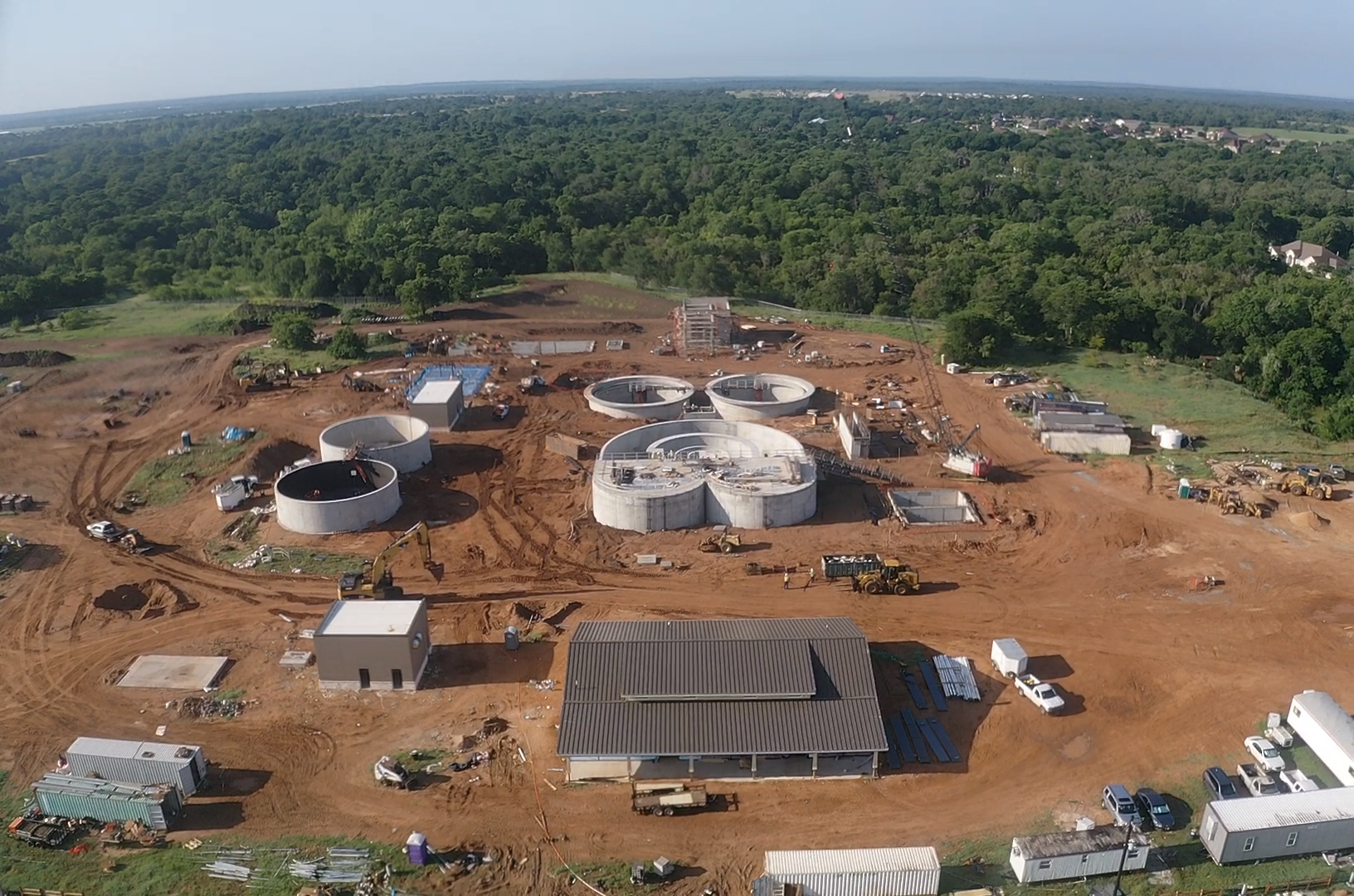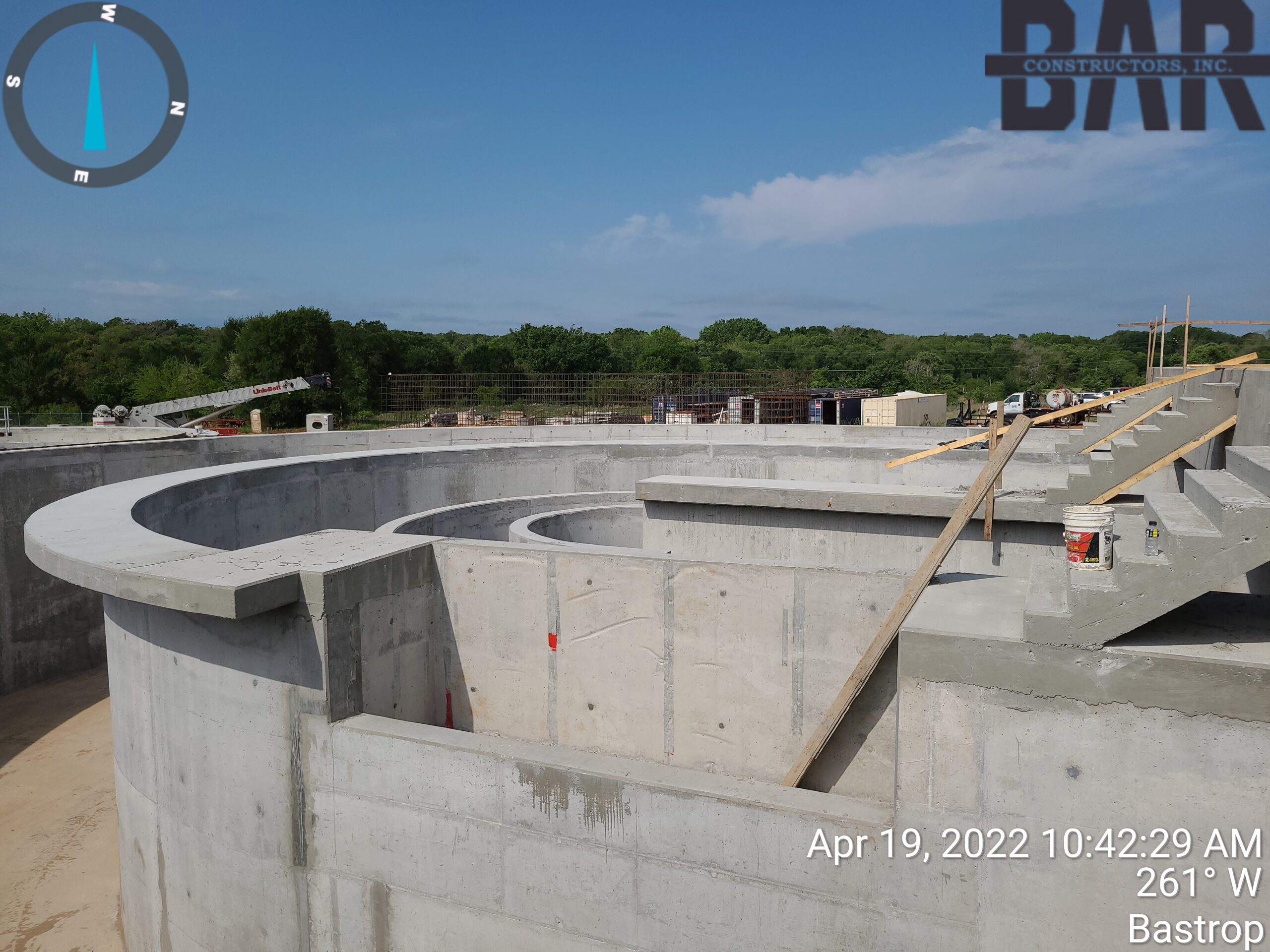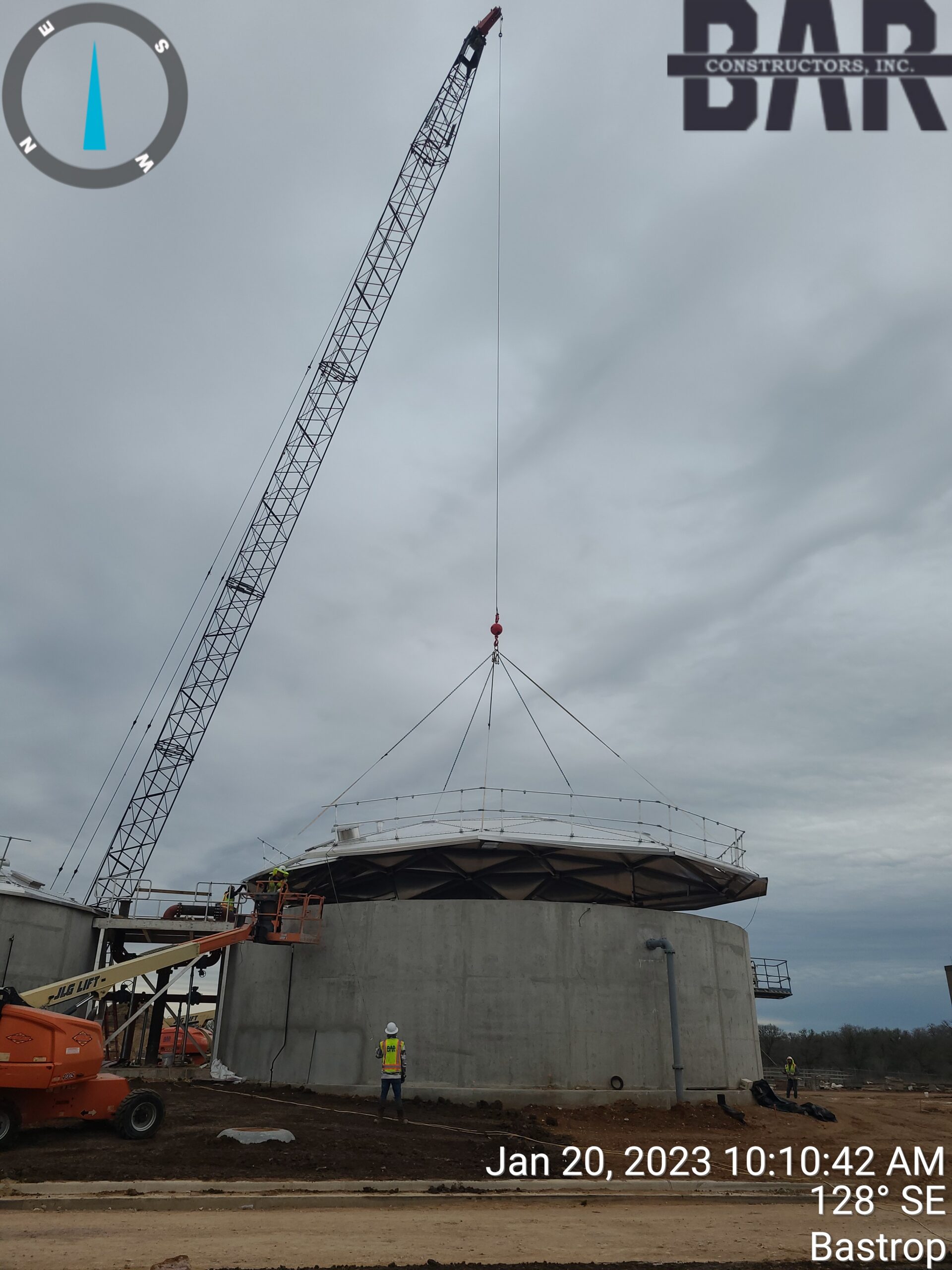
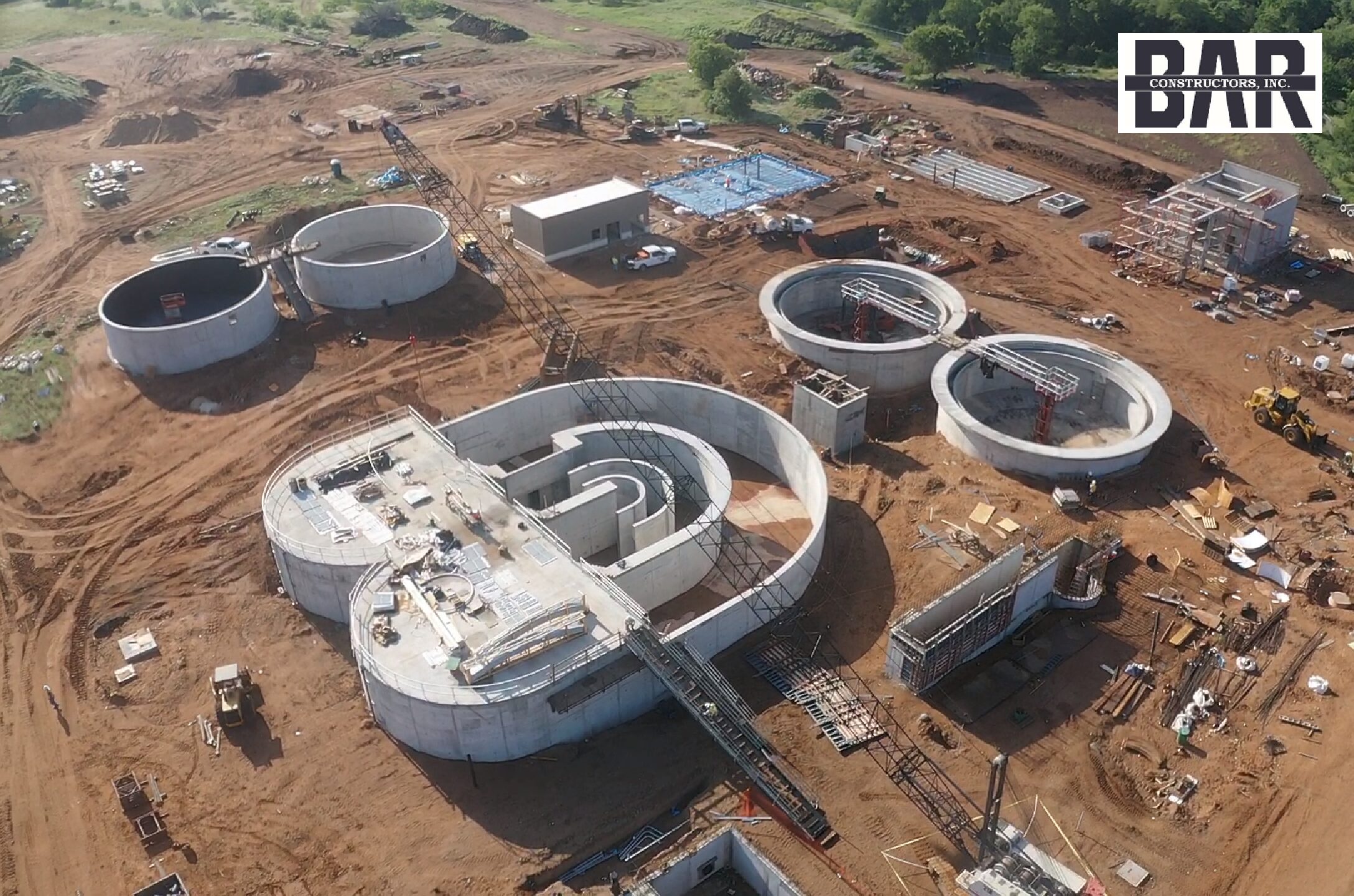
This project consisted of constructing a brand-new wastewater treatment facility for the City of Bastrop, Texas, designed to process approximately 2 million gallons per day (MGD). The facility was designed by KSA Engineers and constructed by BAR Constructors, Inc..
Construction included a 4,900-square-foot Administration and Operations Building, which houses plant operators and provides centralized control and monitoring of the wastewater treatment process.
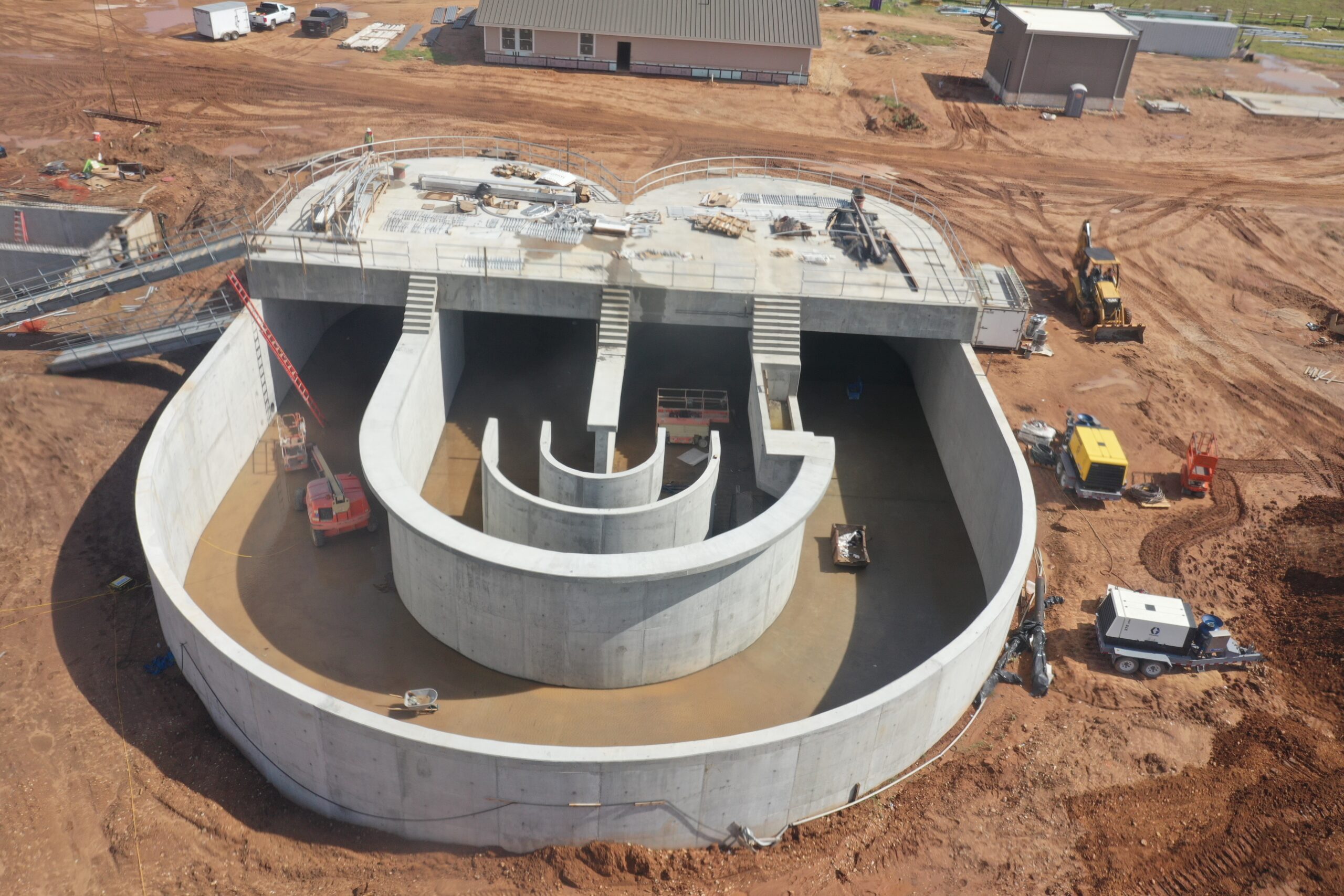
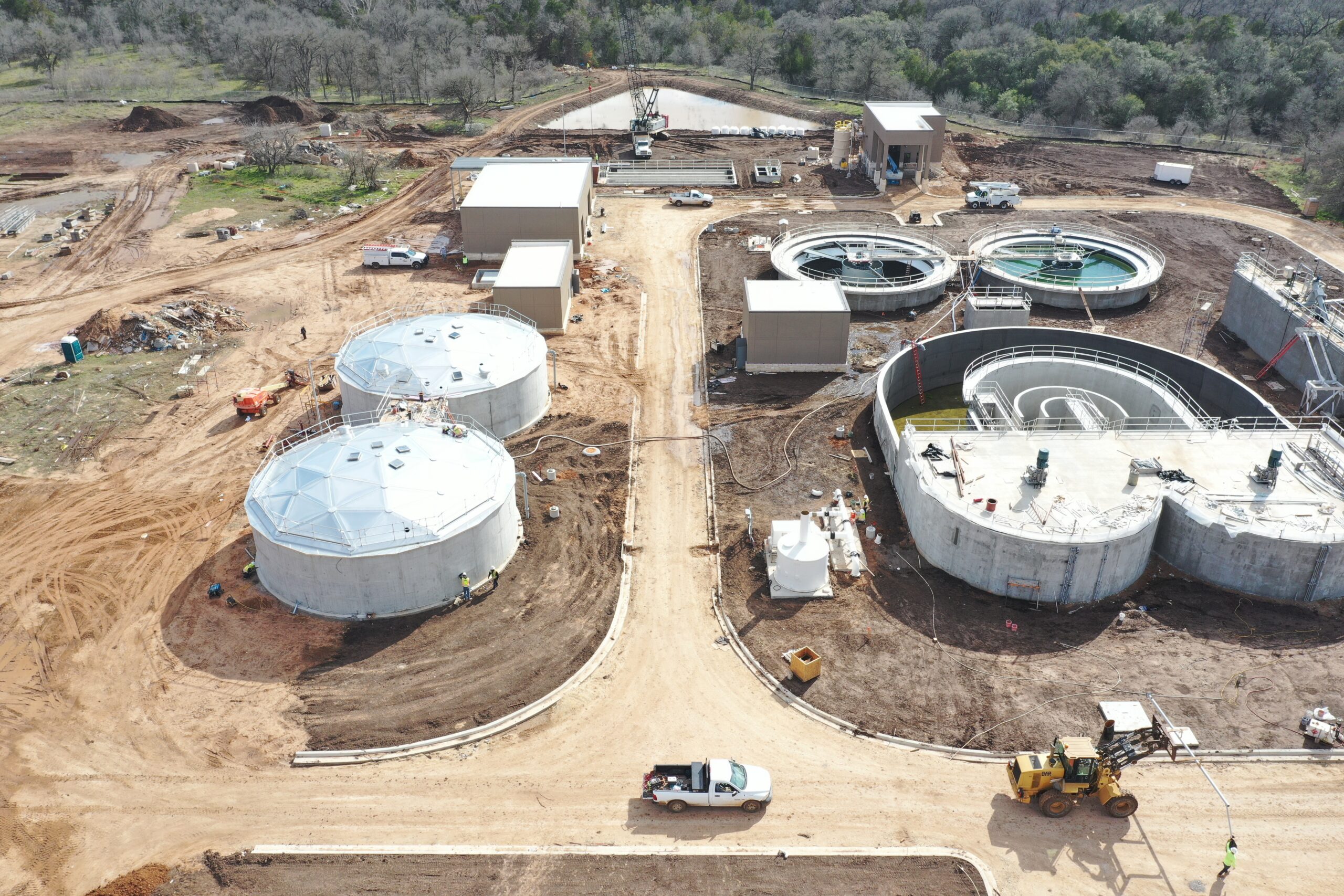
Beginning at the head of the plant, a new Influent Lift Station was constructed with three non-clog submersible pumps, each capable of pumping 1,800 gallons per minute (GPM), delivering influent wastewater to the Headworks and Grit Removal Structure. From the headworks, wastewater flowed to the Oxidation Ditch, a 1-million-gallon treatment basin equipped with two Ovivo aerators that provide oxygenation for the biological treatment process.
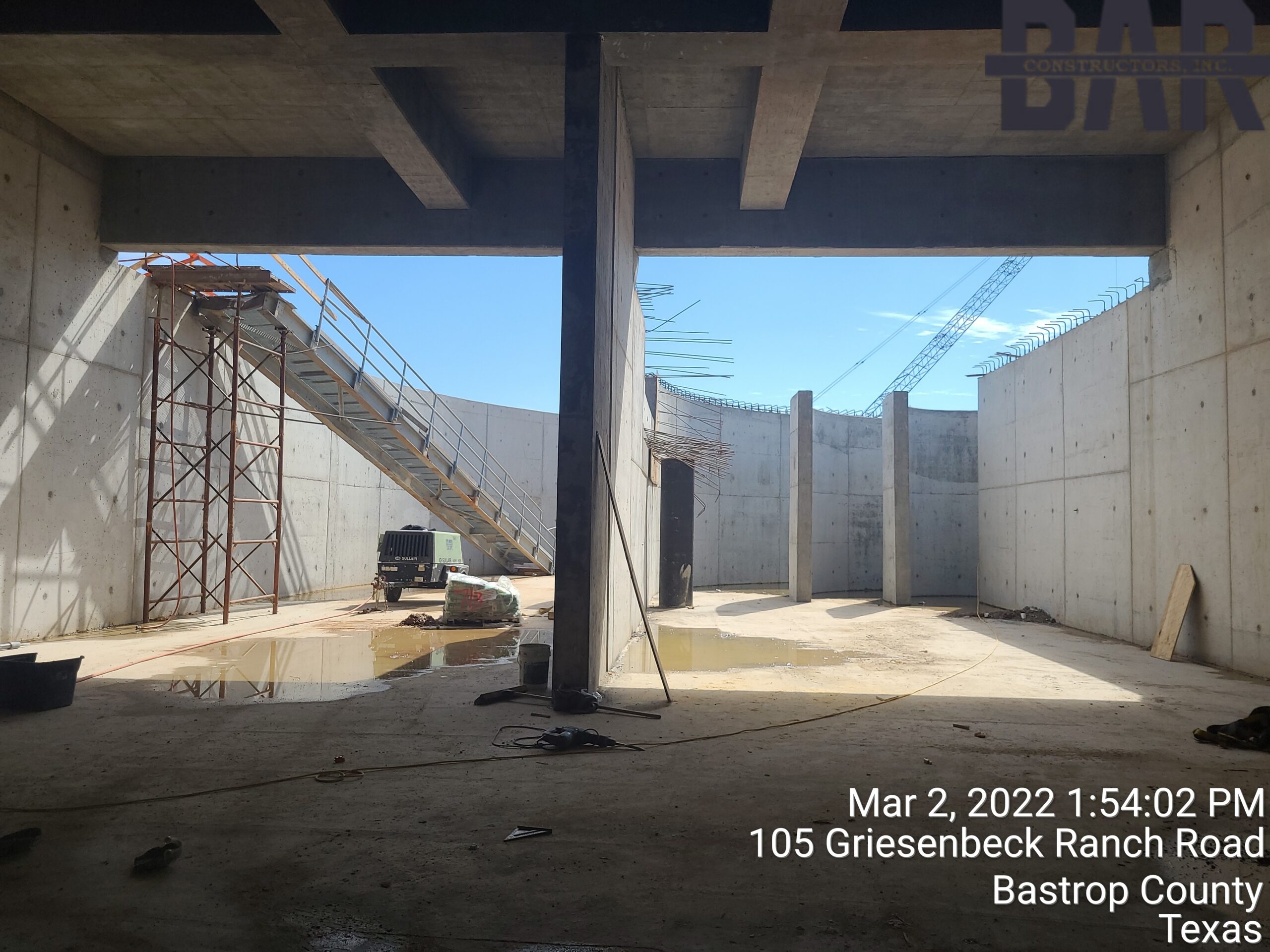
Treated water from the oxidation ditch was routed through a Clarifier Splitter Structure, which distributed flow to two 57-foot-diameter clarifiers. Clarified sludge was then directed to the Sludge Pump Station, which conveyed solids to two 52-foot-diameter aluminum-covered digesters, while a portion of the return activated sludge was recirculated back to the oxidation ditch to maintain the biological treatment process.
Scum collected in the system was pumped to the digesters via the Scum Pump Station, which included two submersible pumps. The digesters received air supplied from a Blower Building equipped with three blowers, distributing air through aeration diffusers to support the digestion process.
To minimize impacts on nearby residents, the Influent Lift Station, Headworks, and Digesters were equipped with an Odor Control System.
From the digesters, biosolids flowed by gravity to the Dewatering Building, where solids were processed through belt press dewatering equipment before being conveyed to the Chlorination Chambers for disinfection. Chlorine was supplied from a Chlorine Building containing two gas-mixing chlorinators, and the facility included a scrubber system to neutralize chlorine gas in the event of a leak.
Following disinfection, treated effluent passed through a Post-Aeration Structure and then through a Parshall Flume for flow monitoring. The fully treated water then flowed to the outfall structure, ultimately discharging into the Colorado River.
The treatment plant structures were interconnected with buried ductile iron, PVC, and HDPE piping. In addition, a site storm drainage system was constructed to collect runoff from paved areas and convey it to a detention pond, which then discharged through a secondary outfall structure.